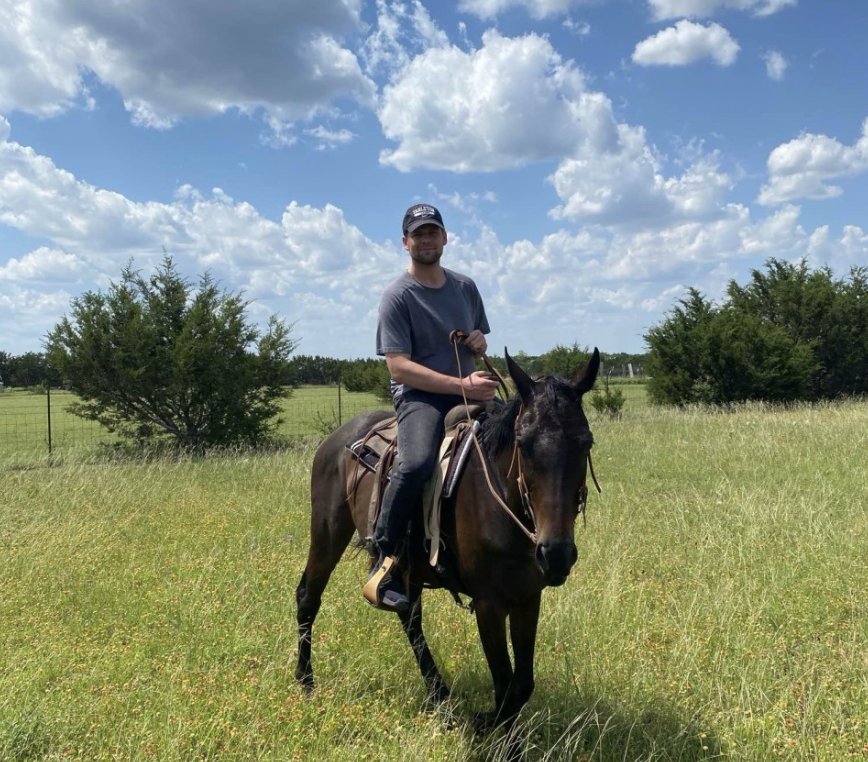
Nick Hellman is the co-founder of Keyveve, an AI-powered platform for accounting, advisory, wealth management, and consulting firms, designed to help centralize all the key documents they use with clients, and automate a lot of the heavy lifting with agents.
It’s his second company, and in this piece, he reflects on the lessons learned between startups numbers one and two – from meeting his co-founder online, to over-investing in their first product, to now, taking a different approach to PMF this time around.
He is also somehow able to recommend a book I’ve never heard of in twenty years of nerding out on business books (always something I enjoy).
So without further ado, here’s Nick 👇
1. Okay, tell us about your business! What’s the backstory? And how did you get your first customer.
It all started when I met my cofounder and CTO, Udeme Ekanem, through Y-Combinator’s co-founder matching platform. At the time, we were two inexperienced entrepreneurs trying to figure things out as we went, but we shared a common goal of building a meaningful company.
We learned a great deal through our first business, a financial-technology startup.
We made plenty of mistakes along the way, including building too much before fully understanding what customers actually wanted. We were bootstrapping the company, and I invested far too much of my own money into a product that ultimately did not have the customer demand we expected.
That experience completely changed how we approached Keyveve.

Because I came from the accounting-technology industry, we had a general interest in solving problems for accounting firms.
When we started working on the business in February 2025, we made a deliberate decision not to rush into building. Instead, we began speaking with industry thought leaders and potential customers to understand how firms actually operated, where their teams were losing time, and which problems were painful enough to justify adopting a new product.
In the early days, we spoke with more than 60 accounting firms. Those conversations helped us understand the challenges firms were facing and gave us confidence that there was a genuine need in the market.
Udeme then led the technical development of the platform, translating what we were hearing from firms into the product itself while shaping its architecture, core workflows, and AI capabilities. He continuously refined the software around feedback from firm leaders and practitioners, turning customer conversations into a practical product designed around how accounting and advisory teams actually work.
Our first customer came from one of those early conversations. They saw the potential in what we were building before many others did and were willing to take a chance on us.
Is the solution perfect? No. In entrepreneurship, the product is always a work in progress.
But I believe that when you maintain a disciplined commitment to listening to your customers and understanding the market you serve, you give yourself the best chance of building something people genuinely need. That has become our North Star at Keyveve.

2. What’s one unconventional decision you made early in your business that you believe set you apart from competitors, and how do you think it shaped your trajectory?
Taking our time in the beginning and doing the extra leg work in the beginning to get the need right.
In today’s world, founders think they have to rush a product to market but I always believed in running your own race in the entrepreneurial world and that extra time you take in the beginning will lay a solid foundation for the future of the business.
As an entrepreneur it is easy to feel like you are behind when you go on social media but you are not late, you are on time and working through the process.
I think this extra time spent that I mentioned also shaped the future roadmap from a technology perspective with our market audience. Doing this builds a future sales pipeline and gains trust with your perspective audience
3. What’s one book most people have never even heard of that you think is worth reading. (DIG DEEP – we’re looking for the books you’ll never see on the NYT list)
One of my favorite books that I have read a few times and one that should be on the bookshelf of any entrepreneur, no matter where they are in the journey. The book is called Disciplined Entrepreneurship: 24 Steps To A Successful Startup by Bill Aulet.
It has a picture book type format that breaks down steps from market segmentation to developing a product plan.
It’s a quick read and breaks down the process in steps which I think can be helpful for any entrepreneur as it can be easy to get overwhelmed with all the different things needed to start a business.
4. What’s one belief about entrepreneurship you held when you started that you’ve completely abandoned, and what made you change your mind?
Before I started my entrepreneurial journey, I had a strong conviction that to be successful you had to have all the answers and any product that you build would be a hit and everyone would buy it.
Between our first business not working out and getting experience as an entrepreneur and talking to other entrepreneurs in the ecosystem you start to realize that no one has all the answers. Your job as an entrepreneur is to listen to your customers and your team, stay curious and be open to listening/learning, and have conviction in your business.
5. What’s one purchase of less than $1,000 that’s made the biggest impact on your happiness, health, or wealth?
A light up mood egg and cheap blue light glasses. The light up mood egg is perfect for after a busy and stressful day to turn on to help with decompressing and calming your brain. The blue light glasses complement the mood egg to reduce the frequency of headaches and help you fall asleep faster at night to avoid blue light before bed.
6. (Optional) Are you married? If so, how’d you meet your spouse, and what role have they played in your entrepreneurial journey?
I am currently not married. I do have a wonderful girlfriend Halley who has been monumental during my entrepreneurial journey. Allowing me to rant and be heard when challenging times arise in the business and finding activities outside the business to help disconnect like horseback riding and hiking on trails.

7. If you were to recommend one under-the-radar Austin spot to another founder for brainstorming or unwinding, where would it be and why?
Some of my best ideas didn’t happen at a desk- they happened when I was active and on a walk. The Barton Creek Greenbelt is my go-to when I need to think through a difficult problem without business distractions.
A shoutout to Leander Texas. Red Horn Brewery & Roastery is an under-the-radar spot that’s 30 minutes from downtown Austin that’s quiet and the omnibus is fantastic to help with brain storming and after you can enjoy other activities that Leander offers.
I will leave you with a famous quote that I keep telling myself that was relayed to me by a mentor that I think every entrepreneur should constantly tell themself especially during those tough days.
Fortune Favors The Bold.